Written by Ana and Luka
Monday, 21 Sept – Farewell

Luka:
The alarm went off at six, and I was already sitting on the edge of the bed. I hadn't slept. Not because of nerves – more like a kid the night before a school trip.
Our backpacks had been waiting by the door since Sunday, the red atlas wrapped in Grandma's old bedsheet on top. At eight we loaded them into the car. Friends were waiting outside the building with a thermos of coffee and a jar of homemade honey "for the road". Nobody wanted to say goodbye, so we all talked about motorway traffic instead.
Ana turned back towards the Drava one more time. I started the car. That's how it began – no fanfare, two coffees and a neighbour honking from the balcony.
Before the motorway we stopped in Tvrđa, Osijek's old town. An empty square, a cloudy morning, the Holy Trinity column – and the two of us with our backpacks and the red atlas under my arm. A friend took our picture, and we laughed as if we were off for a weekend. The first photo of our trip around the world was taken a kilometre and a half from home.
Plitvice is about four and a half hours away. Near Karlovac it started raining and didn't stop. We arrived around one, soaked to the knees, at a small family guesthouse near the park entrance. Our host greeted us with soup, as if we were her own.
Tuesday, 22 Sept – Plitvice

Ana:
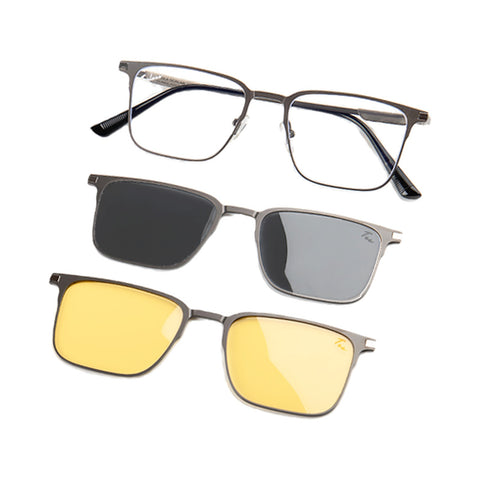
After a night of rain, the morning at the lakes was clean and fresh, with a thin mist over the water. Luka put on his yellow lenses ("for fog, like Saša said") and walked the wooden boardwalks as if he'd been given new eyes. I stopped at the first big waterfall and just stared.
How many times had we said "let's go to Plitvice this weekend"? We never went. Until now.
When the sun broke through, the green water looked almost unreal. Right there, in front of the waterfalls, Luka kissed me – in front of a hundred tourists, as if we were alone. Someone handed us back the phone and said, "Come on, once more, for the photo." And that's how we got our first real picture of the trip.
Around two we set off for the sea. Three hours through Lika, then south down the motorway – and suddenly, around a bend, the Adriatic. We reached Split before dark, and the bura wind met us on the Riva as if it wanted to blow us back to Slavonia. It didn't manage.
Wednesday, 23 Sept – Marjan

Luka:
Our first real morning in Split, not a cloud in the sky. We climbed up through Varoš, step by step, to the first viewpoint on Marjan hill. Ana counted the steps and gave up somewhere around a hundred and fifty.
At the top – all of Split below us. Red roofs, the bell tower of St. Domnius, the harbour and the ferries, islands in the haze, and mountains behind it all. I put on the dark lenses and just stood there for a long time, leaning on the stone railing.
Somewhere down in the harbour our ship was waiting too. We didn't know which one yet. But we knew it was there.
Thursday, 24 Sept – Coffee and Gregory's toe


Ana:
In Split you don't drink coffee – you sit it. We learned that on Thursday morning, in a tiny café in a stone alley of the old town, under a white-and-blue scarf hanging on the wall. The waiter looked us up and down and asked: "Tourists?" Luka said: "No – Slavonians." Everyone at the next tables laughed.
After coffee we went to Gregory of Nin, the giant statue by the Golden Gate. He has one toe – shiny, golden, polished by millions of hands. They say it brings luck if you rub it. We both rubbed it, at the same time. Eighty weeks of luck takes a bit more effort. 😄
Friday, 25 Sept – A rainy day
Luka:
On Friday Split showed us it can be grey too. Rain from the morning on. We went down into the cellars of Diocletian's Palace and wandered for two hours through stone halls older than anything we had ever seen. Ana says it smells of history down there. I say it smells of damp. We agreed we're both right.
In the afternoon, instead of plans, we had a job to do: the car. We couldn't take it around the world, and we couldn't leave it in Split for two years. Dad, of course, said straight away: "I'm coming to get it." He arrives by bus tomorrow evening.
We spent the rest of the rainy afternoon at the hotel. Rain drumming on the window, Split all grey, just the two of us with nowhere to be. The rest doesn't go on the blog. ❤️
Saturday, 26 Sept – The sea
Ana:
The sun came back, and the sea was still warm. At Bačvice beach we swam as if it were August. Luka tried to learn picigin from three local guys – wet, loud and incredibly patient. He didn't learn it. But the guys laughed, and he laughed, and that was enough.
As we were leaving, Luka handed one of them a small card in a grey-and-black sleeve from the big ALC backpack. "A souvenir from two Slavonians. Read the instructions inside." The first of a hundred. I thought I'd laugh about it – instead I got a little lump in my throat.
In the evening Luka's dad arrived. Short and simple: keys, a hug, "call us every week". I watched him drive our car away along the waterfront, and only then did it feel real – from now on we travel on foot, by boat, by train and by plane. No coming home until spring 2028.
Sunday, 27 Sept – Last evening
Luka:
It was World Tourism Day, so in the morning we joined a free guided walk through the palace. Ana asked more questions than the rest of the group put together.
In the afternoon we packed our backpacks – everything we own for the next two years, on our backs.
Our last evening in Croatia. We walked along the Riva with our backpacks on, slowly, hand in hand, between the palm trees, while the sky turned pink. We didn't say much. We didn't need to.


The ferry to Ancona docks at St. Peter's pier, on the other side of the harbour, opposite the bus and train station. You need to be at the pier at least an hour before departure, so by half past six we were already standing next to the Aurelia – a big white ship with a dark-blue band. We asked a fellow passenger to take one more photo of us, with the ship behind us. Around us: trucks, cars, passengers with suitcases and one old man with two crates of tomatoes.
At 7:30 pm the ferry pulled away from the quay. We went to the stern, right at the back of the ship, and stood by the railing. Below us the wake foamed – a straight white line leading back towards the Riva, the palms, the bell tower, Marjan. Split grew smaller until the lights were just a golden line on the horizon.
Ana waved. Not to anyone in particular – to the coast. To family back in Osijek, to Dad driving our car through Lika, to friends with a thermos of coffee. I put my arm around her waist and waved with her.
Then I saw the tear. Just one, on her cheek, in the deck light. She didn't wipe it away.

Only then did it really hit us. All those "one day"s, all the maps, plans and jokes around the table – suddenly it was real. Croatia behind us, 79 weeks and the whole world ahead. No more "maybe". No turning back.
"Are we crazy?" she whispered.
"We are," I said. "That's the best part."
We stood there until the coast disappeared completely into the dark. Only then did we go inside.
Ana took out the red atlas and opened it at Italy. Grandpa's first circle.
"Rome," she said. "Tomorrow."
We arrive in Ancona on Monday at seven in the morning. But that's a story for Week 2.
Ana and Luka
💡 Did you know?
The Plitvice Lakes are still growing. Sixteen lakes step down in cascades, separated by natural dams of travertine built together by water, air, mosses and algae. These dams grow by roughly a centimetre a year. Geologically the lakes are very young: they have existed only since the end of the last ice age, 12,000 to 15,000 years ago.
In 1979 Plitvice was among the first natural sites in the world to be inscribed on the UNESCO World Heritage List. Today more than a million people visit every year.

Follow us on the map – alc-life.com
Live better. Every day.