Written by Ana & Luka
Monday, 28 Sept – Ancona, Assisi, Rome
Ana:
I woke up at half past five. Luka was asleep, hugging his pillow as if he were the one travelling around the world and I was just along for the ride. I threw on a jacket and went out on deck.

The sea was calm, with a thin mist lying over it. The sun was rising behind us, on our side of the sea, and ahead of the ship, in a pink haze, Ancona slowly appeared: the breakwater, the cranes, the rooftops and the cathedral on the hill above it all. For the first time in my life I saw Italy from the sea. I didn't want to wake him. Some things you have to see alone, and then tell.
At seven we walked off the Aurelia, backpacks on. At the port we picked up a little white car that we'd drop off in Rome. Luka drove, and I navigated, with my phone and the red atlas on my lap, open at grandpa's circle around Rome.
Across the Apennines the road winds between hills, olive groves and stone villages perched on the hilltops. Around noon we reached Assisi. The town is built of pink stone and looks like it hasn't been in a hurry for eight hundred years. In the upper church of the Basilica of St Francis: Giotto's frescoes, silence, and people whispering. Carved in stone: Pax et bonum, peace and good.

Luka was quiet for a long time. Then he said: "If we're carrying something around the world, let it be that."
There, on the steps in front of the basilica, we agreed on a new rule. One card a day from the big backpack, to one person in the place where we are. Not someone we need, but someone who makes our day. And with every one we say the same sentence: "Read the instructions in the sleeve. You'll see why we carry one." The first one in Italy went to an old Franciscan friar in a brown habit who, without our asking, showed us where the best view over the valley was. He looked at the card, then at us, then laughed and said just: "Pace e bene."
We reached Rome before dark, returned the car and found our room in Trastevere on foot. Third floor, no lift, green shutters, a wrought-iron bed that creaks if you so much as look at it.
"I think the walls are made of paper," Luka whispered.
"Then we'll be quiet," I said.
We weren't.
In the morning the signora on the balcony across the street, coffee in hand, greeted us with "Buongiorno, ragazzi!" and winked. Luka blushed. I didn't. 😇
Tuesday, 29 Sept – Trevi Fountain
Luka:
You don't tour Rome, you wander it. We started at the Pantheon. At the top of the dome there's a round hole you can see the sky through, and when it rains, the rain falls straight into the church. Two thousand years, and nobody has closed it. Ana says it's the most beautiful window in the world.
Then Piazza Navona, street painters, and an accordion player who played "Volare" for Ana because she told him we were from Croatia. Why "Volare", I don't know. But it worked, so today's card went to him. He tucked it into his hatband and played one more.
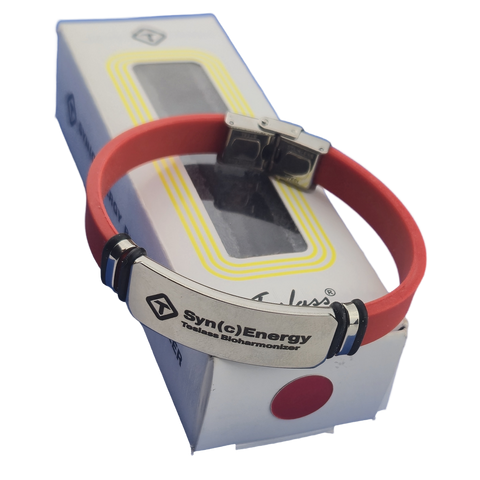
We have a new little ritual too, born that very morning. Before we leave the room, we tap our wrists together, her red bracelet against my green one, the way you clink glasses. Our quiet "let's go". Don't ask why. It just happened, and now we don't go out without it.
The Trevi Fountain is bigger than it looks in pictures, and the crowd even bigger. The rule is simple: turn your back to it, coin in your right hand, throw it over your left shoulder. One coin means you'll come back to Rome.

I threw one. Ana threw two.
"Two?"
"The second one means a new love."
"Excuse me?!"
"So you fall in love again," she said calmly. "With me, of course."
Someone took our picture right at that moment. In the photo I'm laughing like a man who has just lost an argument. By the way, the coins from the fountain go to charity, so it's a good deed too. Mine, at least.
Wednesday, 30 Sept – The Vatican
Ana:
We got to St Peter's Square early, while the colonnades were still casting long shadows. Luka insisted we climb the dome on foot: 551 steps. The last part is so narrow and curved that you walk at a slant, because the wall leans with the dome. Luka walked behind me the whole way. He claims it was "for safety". I half believe him.
From the top, all of Rome: rooftops, domes, the Tiber, and somewhere far off our Trastevere.
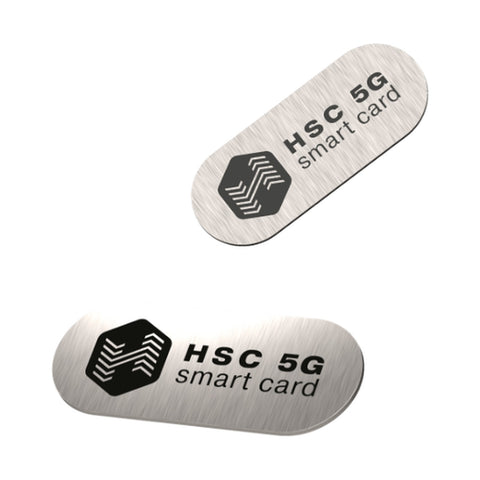
I took out my phone to film the panorama. An older Japanese man next to me pointed at the back of my phone, at the small silver HSC card we stuck on back in Osijek.
"What is this?"
Before I could say a word, Luka pulled one of the cards in their grey-and-black sleeves out of his pocket, taken from the big backpack that morning, and handed it to him. "From Croatia. For a good day."
The man bowed. So did we. Then he did again. Then we did again. Today's card went to Japan.
Towards evening we walked down Via della Conciliazione to the Tiber and climbed up Castel Sant'Angelo. It's round and massive, as if someone had cast it in one piece, and inside it's a labyrinth of ramps, corridors and narrow stairs. At the very top there's a terrace, and above it a huge bronze Archangel Michael with spread wings, just sliding his sword back into its sheath.

The sun was setting right behind the dome of St Peter's. All of Rome was orange.
I grabbed Luka by the collar of his shirt and pulled him towards me.
"No lying in front of an archangel," I said. "Is this the best day so far?"
"The day isn't over yet," he said.
He was right. It wasn't.
By the way, Tosca jumps from these ramparts in the opera. We took the stairs. 😄
Thursday, 1 Oct – The Colosseum
Luka:
At the metro exit in front of the Colosseum, a centurion was waiting for us. A proper Roman one: helmet with a red crest, armour, cape, sword, sandals. The only giveaways were the watch on his wrist and the phone tucked into his belt.
"Foto? Foto!"
Ana immediately snuggled up to his armour and started winking, to see whether I'd get jealous. I did. He raised his sword over my head, and I put my hands up like a prisoner. Someone took a picture, and everyone around us laughed.

Then came the bill: "Piccolo contributo… dieci euro." Before I could get my wallet out, someone shouted "Vigili!". At the last second Ana tucked a card into his belt, next to his phone, and called out "Leggi le istruzioni!", and our centurion vanished into the crowd, sword under his arm, faster than the Roman legions before Hannibal. We later found out that centurions have been banned at the Colosseum for years, but they still turn up.
"Two thousand years and nobody could beat him," said Ana. "And then a traffic warden."
In the afternoon, around three, a downpour. We sheltered under the arches and waited, soaked and laughing, like two kids. When it stopped, the sky opened and the stone of the Colosseum glowed gold, as if someone had just washed it for us. Ana kissed me on the cheek.

"That's for being brave in front of a sword."
"And the rest?"
"You'll get the rest later."
I did.
Friday, 2 Oct – The market and the Via Appia
Ana:
In the morning it was drizzling, so we went to Campo de' Fiori, the market beneath the statue of the hooded monk. Sun-dried tomatoes, bunches of oregano, strings of chilli peppers, lemons as big as a fist. I bought a little of everything, "for jars when we get home", and Luka just rolled his eyes.
The spice seller looked at us and asked: "Sposi?" Married?
"Sì," said Luka.
"Luna di miele?" Honeymoon?
"The longest in the world. Eighty weeks."
The seller whistled, clapped his hands and threw an extra bunch of oregano into our bag, "for luck". In return Luka gave him today's card. And I spent the whole afternoon thinking about the way he said it. As if he were showing off. After all these years, he's still showing me off.
By noon it had cleared up, so we rented bikes and set off along the Via Appia Antica. The road is more than two thousand three hundred years old, lined with umbrella pines, tombs and ruins, and under the wheels huge stone blocks laid by Roman slaves. Twenty-three-century-old cobbles don't forgive. Luka nearly ended up in the grass twice, and both times claimed it was "on purpose, for the photo".
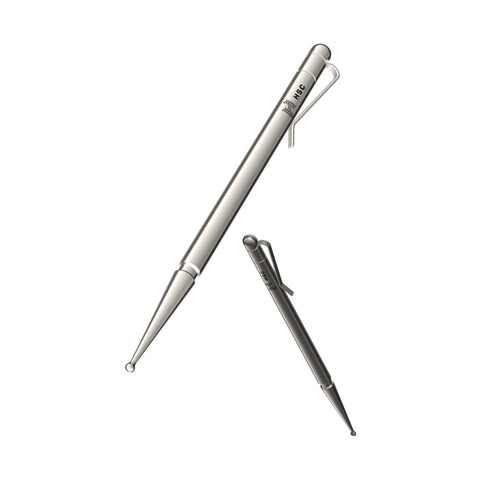
In the evening, back in the room, our legs felt like lead. Five days of Roman cobbles, 551 steps and the Via Appia by bike. I took the scalar needle out of its little leather case and started my evening round: with the tip of the needle I slowly touch points on the joints, knees and feet. First mine, then Luka's.
"You and your needle again," he laughed, but he still obediently stretched his legs out towards me.
Everyone has their evening ritual. Mine is the needle. His, as it turned out, is the massage that comes after the needle.
The rest doesn't go on the blog. 😉
Saturday, 3 Oct – The keyhole and the night train
Luka:
As we were leaving in the morning, the signora on the balcony across the street was having her coffee again. Ana called out "Signora, per lei!" and tossed her a card across the narrow street. The signora caught it one-handed, as if she'd been doing it all her life, and winked again. This time at both of us.
We spent our last Roman morning on the Aventine, in the Orange Garden. The whole city lies below, and the dome of St Peter's floats above the rooftops. A little further on is the green door of the villa of the Knights of Malta, with a queue of people waiting to peek through the keyhole.
Through the keyhole you see an avenue of trees shaped like a tunnel, and at the end of it, perfectly framed, the dome of St Peter's. They say that through that one hole you can see three states: Italy, the Vatican and the Order of Malta.

While I was peeking, Ana pinched my side.
"Ow! What was that?"
"Nothing. Just so you know I'm watching too."
Knights of Malta. Malta. I realised the next circle in the atlas was already calling us.
In the afternoon we packed our backpacks. At half past eight the night train to Syracuse left Termini. We had a couchette for two, about as wide as an ironing board.
It turned out to be wide enough.
"Write on the blog that we slept," said Ana.
We slept. Eventually.
Sunday, 4 Oct – The Strait of Messina
Ana:
A jolt woke me. The train stopped, then rolled backwards, then stopped again. They were uncoupling the carriages and pushing them one by one into the belly of a ferry. A train on a ship! I thought that didn't exist anywhere in the world anymore.
We went out on deck just as the sun was rising over Calabria. The strait was calm and blue, and ahead of us Sicily: Messina, the hills, and the golden statue of the Madonna at the harbour entrance, blessing everyone who sails in.

Luka hugged me from behind and rested his chin on my shoulder. Wind, sun and the smell of the sea.
"Do you know what day it is?" I asked.
"Sunday?"
"St Francis. The patron saint of Italy."
We started the week in Assisi, in front of his basilica, and we're ending it with his name on the sea. The circle closed on its own. I don't believe in coincidences. Not anymore.
Around nine we arrived in Syracuse. In the afternoon, a swim at Ortigia, stone rocks and water as clear as glass. An old fisherman mending his nets on the rocks got the last card of the week. I counted the cards in the backpack: 92 left. Luka says that when they run out, we'll have to call that number in Osijek. In the evening, sunset, two glasses of wine and a view to the south.
Somewhere out there, beyond the horizon, is Malta.
"Tomorrow," said Luka, and closed the atlas.
But that's a story for Week 3.
Ana & Luka
💡 Did you know?
Castel Sant'Angelo wasn't built as a fortress, but as the tomb of Emperor Hadrian. It got its name in 590. Rome was being ravaged by plague, and Pope Gregory the Great, leading a procession, saw the Archangel Michael on top of the building sliding his sword back into its sheath. It was taken as a sign that the plague was over. It has been called Castel Sant'Angelo, the Castle of the Holy Angel, ever since, and the archangel still stands on top. This one is bronze, from 1753.
And the pope can reach it without setting foot in the street. A fortified corridor along the top of the walls, the Passetto di Borgo, runs from the Vatican to the castle, and popes used it to flee whenever Rome was attacked.

Follow us on the map – alc-life.com
Live better. Every day.