Written by Ana & Luka
Monday, 12 Oct – Luka was first
Ana:
Let it be recorded, in black and white, for future generations: Luka got to the airport in Malta first.
I was late. At the last minute I ran to that kiosk in the terminal for a bag of pastizzi for the road, because I thought they might be the last pastizzi of my life. When I dragged myself, out of breath, to the gate, he was sitting there with his legs crossed, boarding pass in hand, wearing the most satisfied face I have ever seen. Like a cat that has just eaten the canary and been praised for it.
"Somebody said yesterday I'd be on time this time," he said.
"Somebody said it to motivate you."
"Somebody succeeded."
He ate the pastizzi himself. All three. He'd earned them.
Luka doesn't like take-offs. He never has. He's an engineer, he knows exactly how a plane flies, how much it weighs and why it shouldn't fall, and that's exactly why he doesn't like it. When the engines roared, he grabbed my hand and squeezed it so hard my bracelet left a mark on my wrist. He only let go over Sicily. Then we were both glued to the window: Etna with a little white plume of smoke, then Sardinia, then the Alps, already dusted with the first snow, like a cake sugared for Sunday.
Paris greeted us with morning haze that melted into real summer by noon. Twenty-two degrees, in the middle of October. The taxi driver, an older gentleman with a moustache and a rosary on his mirror, said he couldn't remember an autumn like it. He drove all the way up to Montmartre with the window down, humming old chansons, and when he realised we were from Croatia, he just said "Ah, la Croatie! Football!" and gave us a discount.
We're staying in a small old hotel at the very top of the hill, on the fifth floor with no lift, in a room under the roof. The stairs are narrow, wooden and creaky, and the backpacks are heavy. On the third floor Luka said we should stay there. On the fourth he said this was my idea. On the fifth he hit his head on the beam. The ceiling slopes, so he hit it once more in the first five minutes. Now he walks around the room stooped, as if he's constantly whispering something to someone.
But the room… It has one small window, and through it you can see all of Paris: grey zinc roofs, hundreds of red chimney pots lined up like soldiers, pigeons, somebody's laundry and, far away, small as a toy, the Eiffel Tower. The bed is white, wide, old and wooden, with lace pillows. On the wall, a black-and-white photo of a couple kissing on a bridge. On the bedside table, a rose in a glass.
"This," I said, "is a room where people fall in love."
"We're already in love."
"Then we'll fall a little more."
The owner, Madame Odile, wears pearl earrings and red lipstick at seven in the morning and at seven in the evening. She's perhaps seventy, and she walks like a ballerina. As she handed us the key, big and brass with a red tassel, she looked us up and down and said: "Ah. Honeymooners?"
"Six years," said Luka.
"Same thing," she said. "In Paris, everybody gets married again."
She got the first Paris card. She read the instructions in the envelope, then looked at us over her glasses as if we had handed her a secret wartime message. She put it in the drawer under the counter, next to the guest book, and locked it.
In the afternoon we wandered around Montmartre without a map. Narrow steep streets, a vineyard in the middle of the city (a real one, with grapes!), little squares with benches and old men playing boules. In a small park we found a wall, Le Mur des je t'aime, the Wall of Love, dark blue and covered with the words "I love you" in hundreds of languages. People stand in front of it looking for their own language. So did I, for a good ten minutes, nose to the tiles. I found "volim te", down in the corner. I don't know whether it's there as Croatian or as one of our neighbours' languages. I didn't care. For us it was ours.
Luka photographed me pointing at those two words. I look like a child who's found her name on a birthday cake.
We had dinner in a tiny crêperie with four tables and a cook from Brittany who flipped the pancakes by hand, without a spatula. Luka had a savoury one, made with buckwheat flour, with ham, cheese and a fried egg in the middle. I had a sweet one, with salted-butter caramel. One. Then I stole half of his. Then we ordered another, with chestnut cream, to share.
Afterwards we sat on the steps below Sacré-Cœur with a five-euro bottle of wine and two paper cups while the sun went down behind the city. The white basilica above us turned pink, then gold, then blue. Below us Paris lit up, street by street. An accordion was playing, people were singing, and a couple in their sixties danced on the steps, slowly, forehead to forehead. Luka put his jacket around my shoulders, even though it wasn't cold.
And then we went back to our room under the roof.
The bed is old, wooden and, as we found out, very loud. Around midnight someone on the other side of the wall knocked three times. Politely. Almost gently.
I laughed into the pillow until I fell asleep. Not that I fell asleep right away.
Tuesday, 13 Oct – Breakfast in the window
Luka:
The warmest day of the week, twenty-one degrees and not a single cloud. Paris is sitting under a high-pressure system that refuses to leave, and we had no objections.
I woke up first. That doesn't happen often with us, so I made the most of it. I got dressed quietly, ducked under the beam (I've learned) and went down five floors to the bakery on the corner. A girl with flour on her cheek works there, and when I said "deux croissants, s'il vous plaît", she answered in English, and fast. Apparently my French has a Slavonian accent. I took two croissants, two pains au chocolat, a baguette still so warm it crackled in the paper, and two coffees in paper cups.
When I came back, Ana was sitting in the window in my shirt, barefoot, knees under her chin, watching the city wake up. Below her the chimneys glowed gold in the haze, pigeons strolled on the tin, and somewhere down below someone was rolling up the iron shutters of a shop.

She said: "Don't move. I want to remember this moment."
I stood in the doorway with a bag of croissants and looked at her. Six years of marriage, twenty-odd years since I met her again at that birthday party in Osijek, and almost thirty since she used to run across our street in her pyjamas. And she still takes my breath away.
So we remembered that moment. Thoroughly. The coffee went cold, and the croissants waited.
We didn't leave the room until noon. We never even touched the croissants. Ana said later it was the best breakfast of her life.
Don't ask.
In the afternoon we went down to the Seine and over to the Île de la Cité, the island in the middle of the river where Paris began two thousand years ago. Notre-Dame stands there whole again, bright and cleaned, with its pointed spire rebuilt after the 2019 fire just as it was before. We queued for half an hour. Inside, the stone was so pale it looked new, and the stained glass threw patches of blue, red and violet across the floor. Ana lit a candle. She didn't say who for. I think I know.
Then across a little bridge to the other island, Saint-Louis, where they sell an ice cream people queue for even in November. We queued too. Ana had raspberry and dark chocolate, I had salted caramel and something with chestnut. On the bridge a boy was playing the double bass, and we ate ice cream and licked our fingers like kids.
Then we set off along the Seine, from Notre-Dame towards the Louvre, past a long row of green wooden boxes fixed to the stone wall. These are the bouquinistes, the second-hand booksellers. They've been here for more than four hundred years: in the morning the boxes are unlocked and their lids propped up to become little roofs, and at night everything is locked again, every day. Old books, postcards, posters, engravings, maps, letters from strangers.

Ana stopped at the stall of an old man with a grey beard and a flat cap, and a pipe he never lit. From one of the boxes she pulled an old map of Paris, yellowed and folded, from the 1920s. Someone had circled one bridge in pencil, the Pont Neuf, and written a date next to it: 1931.
"Like Grandpa," she whispered.
She haggled for ten minutes in a French she doesn't speak, with her hands, her smile and one word, s'il vous plaît, which she repeated maybe twenty times. The old man enjoyed it more than she did. In the end he sold it to her at half price, on one condition: that we tell him why we wanted it so badly.
Ana told him about Grandpa, about the red atlas in the attic, the eighty circles and the words on the last page, "One day." I translated the bits she didn't know in English, and he nodded.
The old man was quiet for a long time. Then he took off his cap, solemnly, as if someone had died or been born.
"Your grandfather was a bouquiniste of the heart," he said.
He got a card. He tucked it into an old book of poetry, between two pages, as a bookmark, and said he would show it to whoever buys that book.
We had dinner in a bistro with red-and-white tablecloths and a waiter who looked as if he'd worked there since it opened, in 1920. Out of stubbornness and bravery, I ordered snails. Six of them arrived, in garlic and parsley butter, with a little fork and tongs that look like a surgical instrument. Ana looked at me as if I'd ordered something alive. They were excellent. She ate four.
She had duck leg, confit de canard, with potatoes roasted in duck fat, and for dessert we shared a crème brûlée. Ana tapped the caramelised sugar crust with her spoon, it cracked like ice on a puddle, and she said: "That's the most beautiful sound in the world." Later she said it wasn't, but that was later.
In the evening we went to the Trocadéro. Every hour on the hour after dark, the Eiffel Tower sparkles for five minutes with thousands of white lights, as if someone had poured champagne all over it. People around us were screaming, filming, hugging. A young man knelt and proposed to his girlfriend, and the whole square applauded. She said yes.

I wasn't looking at the tower. I was looking at Ana.
"Would you marry me again?" I asked.
She looked at me seriously, the way she looks at patients when she's assessing something.
"Ask me again in eighty weeks."
Then she kissed me. The tower kept sparkling. I think it was the most beautiful "maybe" I have ever been given.
We walked home, across half of Paris, over bridges, along the river, slowly, in no hurry to get anywhere. On the fifth floor I ducked under the beam without thinking.
That night the neighbour on the other side of the wall knocked only once. He must be getting used to it.
Wednesday, 14 Oct – A portrait in Montmartre
Ana:
Sunny, nineteen degrees, and Montmartre full of painters.
In the morning we split up, for the first time on this trip, for three hours. Luka went to the old museum of science and industry, the Musée des Arts et Métiers, where Foucault's pendulum hangs in a former church and the display cases hold the first radios, the first calculating machines and the first aeroplanes. He came back like a boy from a funfair. He talked about the pendulum for twenty minutes, and I listened, and don't ask me anything about it, because I was watching his eyes, not hearing his words.
Meanwhile I was at a macaron class, those little round French biscuits made of egg whites and almond flour, as colourful as sweets. There were six of us: two Japanese women, an American, a Brazilian boy with his mother, and me. Our teacher, Madame Claire, had a flowery apron and the patience of a saint. My macarons came out a little lopsided, a little cracked, and definitely the tastiest. I filled them with pistachio and raspberry cream and packed them in a little box for Luka.
He ate them all, on a bench outside the museum, and said they were better than the ones in the shop window. He was lying. I love him.
Then we went underground. The Catacombs. Luka had wanted this since Osijek: "A city beneath the city, Ana. As an engineer, it's a miracle." I wanted coffee.
A hundred and thirty-one steps, round and round, deeper and deeper, until the air cools to fourteen degrees and starts to smell of stone and time. Then a corridor. Then the sign above the entrance: Arrête! C'est ici l'empire de la Mort. Stop, this is the empire of death. I took Luka's hand and didn't let go until the end.
The walls are made of bones. Not as a figure of speech. Literally. Thigh bones stacked like firewood for winter, and between them rows of skulls, neat as embroidery. Six million people. Nobody talks loudly. Not even the Americans.
Our guide, a thin gentleman in a black jumper, stopped by one of the walls and lowered his voice. "These bones came from the Cemetery of the Holy Innocents. Nicolas Flamel was buried there." He looked at us over his glasses. "They say he was an alchemist. They say he found the philosopher's stone. They also say that when they opened his grave, there was nothing in it." He shrugged. "They say."
Luka, of course, immediately wanted to know where Flamel was. The guide just smiled.
Then he told us about Philibert Aspairt, a hospital doorkeeper who came down here alone in 1793, with a candle, and never came back. They found him eleven years later, a few minutes from an exit, with a ring of keys in his hand.
Luka checked his phone battery. Twice.
When we came out into the sun, onto a little square full of traffic and the smell of bread, he held me tighter than usual. "You know what I realised down there?" he said. "That life is short, and you are very warm." The coffee was waiting. It didn't wait long.
In the afternoon we climbed up to Place du Tertre. The painters there sit under red umbrellas and do what they did a hundred years ago: paint rooftops, sketch tourists and wait. One of them, Monsieur Gérard, old, in a tweed cap, round glasses on the tip of his nose and hands black with charcoal, waved us over.
"Vous deux. Assis." You two. Sit.
We sat on two little folding stools, my head on Luka's shoulder, and we were supposed to keep still for forty minutes. We didn't last four. Luka kept whispering nonsense, about the snails, the beam, the neighbour behind the wall, and I kept laughing, and Monsieur Gérard sighed like a man who has drawn far too many couples in love.
"Don't move," he said. "Kiss later. You have all night."
The whole square laughed. An Italian woman applauded. I went red to the tips of my ears. Luka didn't. Luka was proud.
The portrait came out beautifully. Charcoal, the two of us, my fringe and Luka's beard, and something in our eyes that even we couldn't draw. Monsieur Gérard signed it in the corner and added the date, small, in pencil, the way Grandpa wrote in the atlas. We rolled it up in a cardboard tube, and now it travels with us, tucked into the side of Luka's backpack. Monsieur Gérard got a card and put it in his breast pocket, "where they keep love letters".

Then we walked down to the market on Rue Lepic, which winds down the hill. There we put together lunch on our feet, out of paper bags: goat's cheese wrapped in a chestnut leaf, three kinds of bread, figs, ham that melted on the tongue, olives and an apple tart, tarte tatin, caramelised and still warm, that still makes my head spin. Luka ate as if there would be no food tomorrow. I collected recipes. The cheese seller wrote hers down for me on the back of a receipt, with a heart, and said cheese should be eaten "at room temperature and with love". I told her we had the second ingredient.
Our last evening in Paris.
We had dinner at a restaurant I chose: tiny, candlelit, five tables, and the chef brought out the plates himself. Fish with butter and lemon, mashed potato that was more butter than potato, and a glass of white wine from the Loire valley. For dessert, chocolate mousse, one, with two spoons. Luka left the last spoonful for me. That's the greatest declaration of love I know.
Then we walked to the Pont des Arts as the lights came on over the Seine. Boats full of people and music passed beneath us. Someone waved, and we waved back. I don't know how long we stood there. I don't even know how we got back up to the fifth floor. All I know is that I took my shoes off on the stairs, that Luka carried them, and that, that night, the neighbour on the other side of the wall stopped knocking.
Or we stopped hearing him.
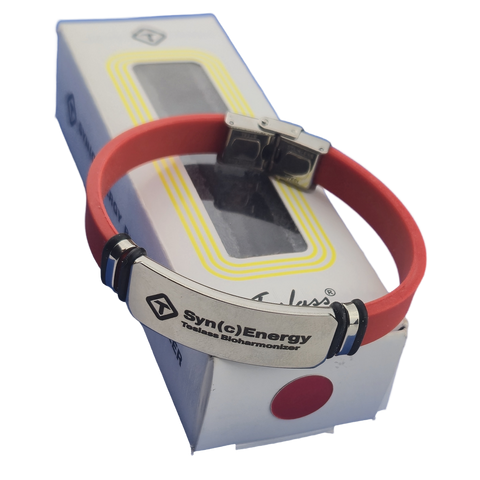
P.S. for Saša B., because I know you're reading: Luka hasn't taken his green bracelet off since day one, the card is on his phone, and before I leave a glass of water by his side of the bed every evening, I touch it with the needle. He doesn't know. I don't know exactly what's going on either, but something is. 😊 Don't tell him about the water.
Thursday, 15 Oct – By train to the city on water
Luka:
At breakfast we finally met the neighbour.
Breakfast is served in a small room on the ground floor, at four round tables, with coffee in big handleless cups you dip your croissant in. At the corner table sat an older gentleman. Monsieur Henri. Eighty-one, white moustache, silk scarf, coffee without sugar, newspaper folded in four. He has stayed at this hotel every October for forty years, ever since he met his late wife here. In the same room. The one next to ours.
Ana froze over her croissant. I pretended to study the jam. For a long time. Apricot jam. Very interesting jam.
Monsieur Henri slowly put down his cup, looked at us over the rim and winked.
"Ah, l'amour," he said. "The wall is thin, but memories are thick. Thank you. You reminded me of forty-six."
Then he leaned towards me, lowered his voice and added: "And you, young man… Three nights in a row. Chapeau. At your age I could only manage two."
Ana laughed so hard she had to go outside, into the street, and laugh into her scarf. I stayed, red-faced, and had another coffee with Monsieur Henri. He told me about his wife, Hélène. They met on the stairs of this hotel; she was coming down, he was going up, and neither would step aside. They had forty-two Octobers together. "None of them was enough," he said.
Monsieur Henri got a card. He said he would take it to his wife at the cemetery, "so she knows that someone in this room is still in love".
Madame Odile hugged us at the door as if we were going off to war, not to the Netherlands. She pressed a little bag of lavender into Ana's hands, "for the wardrobe, for luck", and said to me: "Mind the beam in life." I think she meant it literally. Then she whispered something in Ana's ear, and Ana blushed to the roots of her fringe. Only on the train did she tell me what it was: "Next time, ask for the room at the end of the corridor. There are no neighbours. And the bed is made of iron."
From the Gare du Nord the high-speed train takes three hours and twenty minutes to Amsterdam. Paris stayed behind in the sunshine, Belgium went by in fog, and the Netherlands met us with grey skies, wind and fifteen degrees. Flat land to the horizon, canals drawn with a ruler, black-and-white cows, sheep, windmills, and a sky that takes up three quarters of the view. Ana spent the whole journey drawing a new map in her notebook, Paris with all our places, little hearts and arrows, and then fell asleep on my shoulder with the pencil in her hand.
The conductor, a tall Belgian with glasses on a chain, stopped by us, looked at sleeping Ana and her map, and whispered: "Bon voyage, les amoureux." Safe travels, lovers.
Amsterdam is our first place. Not Grandpa's, ours. One of the ten blue stars we drew into the red atlas ourselves that evening in Osijek. Ana insisted we put it on the list, because as a student she was supposed to come here on an exchange, and it never happened. "It didn't happen then," she said on the train. "It's happening now."
Walking out of Amsterdam Centraal is like walking into a different film. In front of you, water, trams, thousands of bicycles parked three storeys high, bicycle bells from every direction, narrow dark-brick houses leaning on each other like old friends after dinner.
Here we aren't sleeping in a hotel. We're sleeping on a boat.
A houseboat on the Prinsengracht canal: wooden, small, green with white trim, with round windows, flowers in pots on the roof and a bed that rocks gently whenever a boat goes by. The owner, Joost, two metres tall, met us with the key and some instructions: "Don't lean too far to one side. The boat is old, but honest."
Next to us, on the neighbouring boat, a tiny old lady with white hair and a ginger cat on her lap was waving at us as if she'd been waiting for us for years.
"Ik ben Mies," she said. I'm Mies.
In the evening, on Joost's recommendation, we went for a rijsttafel, a "rice table", the Indonesian feast the Dutch have loved since the days they traded with faraway islands. Sixteen little bowls arrived at our table: chicken in peanut sauce, beef simmered in coconut for hours, fiery sambal, eggs in curry, fried bananas, skewers, chilli pickles, coconut toasted with peanuts. You eat it all with rice, a little of everything, something new every time. Ana tried the sambal once. After that she drank my water, her water and half a jug.
We got back to the boat as a light rain began. The drops tapped on the roof like fingers on a table. The boat rocked gently. Ana said it was like sleeping in a cradle.
Who Mies is, you'll find out tomorrow.
Friday, 16 Oct – Mrs Mies's radio
Ana:
It rained all day. Real, stubborn Dutch rain, with a wind that blew it sideways across the canal, so your umbrella is only there so you have something to hold.
In the morning Mies knocked on our round window and invited us over for coffee. The coffee was strong, and with it came a stroopwafel, a thin waffle glued together with syrup, which you put on top of your cup so the steam softens it. Mies showed us how it's done, seriously, as if she were teaching us a family secret.
Inside, her boat is like a box of memories: a brass ship's lamp, framed photos, plants on every shelf, crocheted cushions, blue porcelain tiles with windmills, and a ginger cat called Kees who sleeps on a cushion as if he owns the boat.
The cat is named after her husband. Her husband died nine years ago. He was a barge captain, carrying cargo along the rivers for forty years, from Rotterdam to Switzerland, and when they retired he built this boat himself, plank by plank. His photo was on the wall: a broad man with a pipe and a captain's cap, smiling as if he'd just told a joke.
In the corner stood an old radio from the fifties, made of walnut, with big round knobs and cloth over the speaker. "Kees listened to it every evening," said Mies. "The news, football and old songs. Since he left, the radio has been silent too."
I looked at Luka. Luka was already on his knees behind the radio.
I've told you Luka restores old radios. At home in Osijek he has seven of them, and I hate them all because they gather dust and take up half the living room. This time I loved him for it.
Mies still had Kees's toolbox, with a soldering iron and all the wires, neatly arranged, as if he might come back any moment. Luka took off the back panel, whistled, and said: "This was built to last." Then he worked for three hours. Measuring, cleaning, soldering, muttering into his beard. One capacitor was swollen like an old potato, so Luka found a replacement in Kees's toolbox, in a little sweet tin with a handwritten label: reserve. Kees, it seems, had planned everything before us. Like Grandpa.
Mies made tea, I held the torch, the cat supervised. Rain drummed on the roof. Nobody said much.
Then Luka turned the knob.
First there was crackling. Then, slowly, the amber dial lit up from inside, as if someone were waking up. And then, through the hiss, the radio began to play an old Dutch song, gentle, with an accordion and a man's voice singing about someone coming home.
Mies put her hand over her mouth. She was crying. Then she stood up, took Luka by the hands and danced with him around the little saloon, between the plants and the cat, with the rain drumming on the roof. Luka dances like a bear. It was the most beautiful dance I have ever seen.

When they finished, I knelt in front of her and fastened a blue bracelet around her thin wrist.
"Blue," I said. "Like the water around your boat."
Mies looked at the bracelet, then at us, then at the radio. "Dank je wel," she said. Thank you. Then she added something in Dutch we didn't understand, and yet we understood.
She wouldn't let us leave without lunch. She made stamppot, mashed potatoes mixed with kale, with a fat smoked sausage on top and a little pool of gravy in the middle. Food for rainy days, she said. We ate two helpings and couldn't get up off the sofa. Kees the cat slept on Luka's feet.
In the evening the whole of Amsterdam was dancing. There's a huge electronic music festival here this week, thousands of events in hundreds of venues across the city, and the streets were full of young people in raincoats with glitter on their faces. First we stopped at a kiosk and ate chips from a paper cone, thick, crunchy, with mayonnaise, standing under an awning while the rain poured down. The best chips in the world, Luka insists, and he can't be persuaded otherwise.
The way to the club took us through the old quarter by the canal, the one famous for its red windows. In the rain the whole street glowed red, and the canal looked as if someone were pouring wine into it. Luka, like every tourist before him, turned his head towards one of the windows. For half a second. Before he could see anything at all, my hand was over his eyes.
"Look at me," I said.
"I am," he said. "I was just checking the curtains. As an engineer."
He paid for it with ice cream. Twice.

Then we ended up in a small basement club by a canal, soaked from the rain, among twenty-year-olds. I thought we'd stay an hour. We danced until three in the morning. A boy with glasses asked us how old we were, and when we told him, he said: "Respect." Luka kept repeating it for the rest of the week.
We walked home barefoot, shoes in hand, in the rain. Luka was singing that song from Mies's radio, even though he doesn't know the words. I was laughing.
The boat rocked a lot that night.
And it wasn't the wind.
In the morning Joost, the owner, came to check the ropes and asked whether there had been a storm in the night, because his boat had "moved strangely". Luka said the wind had been blowing from the north. On her own boat, Mies just looked down into her cup and smiled. Kees the cat wouldn't look at us all morning.
Saturday, 17 Oct – Bicycles, herring and bulbs
Luka:
The rain stopped, the wind calmed down, fifteen degrees and clouds with the sun peeking through now and then. Perfect for cycling, said Ana.
Amsterdam has more bicycles than people. I hadn't sat on a bicycle in twenty years. The last time it was Grandpa's old bike, in the yard by the walnut tree, and I ended up in the nettles.
The young man at the rental shop, Daan, took one look at me and knew. He gave me the oldest bike, black, heavy, no gears, with a back-pedal brake. "Pedal backwards to brake," he said. "Don't forget."
I forgot.
For the first hundred metres I rode like a drunk giraffe. Ana raced ahead, turning around and laughing so loudly that people looked out of their windows. She rides as if she was born on a bike. I ride as if someone put me on one against my will. Near the Westerkerk I tried to brake with my hand, there was no hand brake, and I came to a stop half a metre from the edge of the canal, one foot on the pavement, the other in the air, with the face of a man who has seen his life flash before him.

An old lady cycled past me with bread in her basket and a shopping bag on her handlebars. She didn't even look at me. To her I was part of the scenery. Like a duck.
After half an hour I got the hang of it. After an hour I started enjoying it. We rode along the canals, over little bridges that arch like a cat's back, through the Jordaan and on to the Vondelpark, where the leaves were yellow and red and people carried their dogs in bike baskets.
On one corner stood a herring cart. A real Dutch thing: raw herring, lightly salted, with chopped onion and pickles. You eat it by holding it by the tail, tipping your head back and lowering it into your mouth, like a sword swallower. Ana said she wouldn't. I said I would. The seller applauded. It was soft, salty, tasting of the sea, unbelievably good. Ana looked at me as if I'd swallowed a goldfish. Then she tried a tiny piece, on bread, and said: "Not bad." Which, from Ana, is the highest praise there is.
In a little cheese shop we tasted gouda, young and old, with cumin, with truffle, with nettle, and one aged three years that was hard and sweet, with little crystals that crunch between your teeth. We bought a piece the size of a brick. We don't know how we'll carry it. We know we'll eat it.
Daan got a card when we returned the bikes. He said I was "the bravest Croatian he'd ever met". I think he was making fun of me. Ana says he wasn't.
Afterwards we went to the flower market, the one that floats on the Singel canal. Tulips bloom in April, but in October you buy bulbs: hundreds of varieties in little net bags, with names that sound like perfumes. Ana bought thirty bulbs, red, yellow and one purple, almost black. The seller explained how to plant them: three times as deep as the bulb is tall, tip upwards, before the first frost.
"We'll plant them on our balcony at home, overlooking the Drava," said Ana. "They'll be in bloom when we get back."
Then she stopped, counted on her fingers and realised we won't be back until April 2028.
"Fine," she said. "Then your mum will plant them. And she'll look after them for us."
That same afternoon we packed them up and posted them to Osijek, with a message for my mum that Ana wrote on the back of a windmill postcard: "Please plant them before the first frost. The black ones especially. Those are for us."
In the evening Mies brought over a plate of poffertjes, little Dutch pancakes with butter and icing sugar, still warm. The blue bracelet was on her wrist. The three of us sat on the roof of our boat under blankets, eating pancakes with our fingers. The sky cleared, and a few stars came out over the canal. Mies told us how Kees proposed to her in Paris, in 1962. We looked at each other.
"In Paris, everybody gets married again," said Ana.
"I only got married once," said Mies. "But every day anew."
From her boat, across the still water, we could hear that same old song.
Sunday, 18 Oct – Rain on the roof
Ana:
The last day, and the coldest. Eleven degrees and pouring from the morning, the kind of weather the Dutch simply call "weather".
First we lay in bed for a long time listening to the rain drumming on the boat's wooden roof. There's no better sound in the world. Or maybe there is: Luka, half asleep, whispering into my hair that I'm the most beautiful city of all the ones we'll see.
"You haven't even seen five yet," I said.
"I don't need to."
When we finally dared to go out, we ran through the Jordaan, an old neighbourhood of narrow streets, to a tiny brown café with wooden tables and windows fogged with steam. In Amsterdam they call them "brown cafés", because their walls have darkened over the centuries from smoke, coffee and stories. They bake the best apple pie in the city: tall as a hat, with thick chunks of apple, cinnamon and raisins, a crunchy pastry lattice on top and a mountain of whipped cream on the side. We ate two slices. Then half of a third.
The owner, a big man with a moustache and an apron, watched us share the last piece and said: "Gezellig." It's a Dutch word that can't be translated. It means something like warm, cosy, together, like home. Like the two of us under a blanket while it rains outside. Like Mies and her cat. Like Kees and his radio.
He got a card, the last one this week. He tucked it behind the mirror over the bar, next to an old photo of some football team from the seventies.
In the afternoon, wet to the knees, we went to the Rijksmuseum, because the rain was pouring down and I wanted to see one painting. Small, and enormous. A young woman in a kitchen pouring milk from a jug, in the light falling from a window. It's so quiet that everyone in the room falls quiet too. I stood in front of it for ten minutes. Luka stood behind me and said nothing. Afterwards he said: "That's what you look like when you make tea in the morning." I don't know if it's true. I know I'll remember it.
In the evening we said goodbye to Mies. She gave us a jar of homemade blackberry jam and a photo of Kees on his barge, "so someone watches over you on your journey". She gave Luka Kees's little sweet tin, the one labelled reserve, empty. "For your spare parts," she said. Luka stood there with the tin in his hands and didn't know what to say. For the first time in six years I saw him lost for words.
As we left, she turned on the radio. That same song again.
Then we sat on the roof of our boat under an umbrella, feet dangling over the canal. Boats passed with their lights on, rain drummed on the umbrella, and somewhere round the corner the bells of the Westerkerk struck nine. I counted the cards in the backpack: exactly eighty left. Eight bracelets.
"Eighty cards and seventy-six weeks to go," said Luka. "Somebody did the maths."
He opened the red atlas. The next circle is in the south, far from the rain, on a hill above an Andalusian town. Next to it Grandpa wrote a single word, small, in pencil: Alhambra.
Granada.
"By plane," said Luka. "And this time I'm bringing the pastizzi."
"In Malta you ate them all."
"Exactly."
That's the story for Week 5.
Ana & Luka
💡 Did you know?
There is another city under Paris. Twenty metres below the streets, 131 steps down, lie the remains of about six million Parisians. With 206 bones in an adult body, that is, roughly, more than a billion bones. By the late 18th century the city's cemeteries were so overcrowded that they had become dangerous, so from 1786 the bones were moved at night, in carts draped in black, into the old quarries beneath the city.
Only one death down there has ever been officially confirmed: Philibert Aspairt, a doorkeeper at the Val-de-Grâce hospital, went into the tunnels in 1793 and never came back. He was found only in 1804, eleven years later, and buried where he lay. His tombstone is still down there.
And in 2004, during a training exercise under the Trocadéro, right across from the Eiffel Tower, Paris police stumbled on a secret underground hall with a cinema screen, a projector, seats, a bar and electricity. On the floor lay a note: "Do not try to find us."
It is always 14 °C down there, summer and winter. Visitors walk about a kilometre and a half, while the old tunnels under Paris run for hundreds of kilometres.

Follow us on the map – alc-life.com
Live better. Every day.